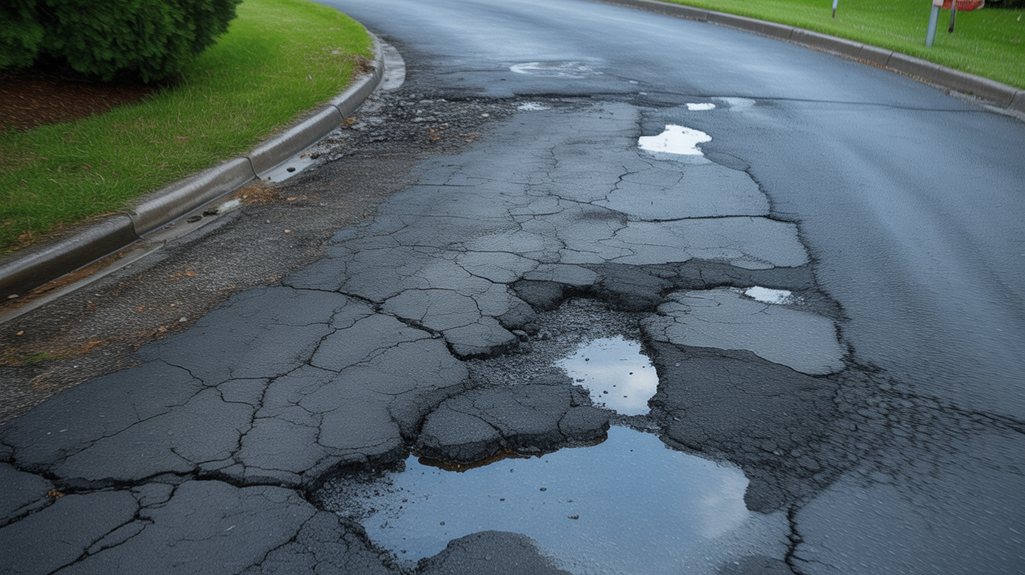
A durable driveway depends on five critical design foundations. First, proper drainage prevents water pooling and foundation weakening through freeze-thaw cycles. Second, compacted soil and quality gravel layers provide essential support and stabilization. Third, selecting climate-appropriate materials—asphalt for mild regions, concrete for moderate climates, gravel for stable areas—prevents costly replacements. Fourth, adequate thickness, typically four to six inches, handles vehicle weight and thermal stress. Fifth, correct slope and grade guarantee water flows away from structures. Each element directly impacts longevity and prevents expensive repairs within years.
Expert Highlights
- Neglect proper drainage design, as water pooling weakens foundations and causes freeze-thaw damage.
- Skip base preparation shortcuts; inadequate soil compaction and poor gravel layers cause premature failure.
- Choose driveway materials suited to your climate to prevent cracking, spalling, and shifting.
- Ensure sufficient thickness, typically four to six inches, for adequate load-bearing capacity and durability.
- Ignore slope and grade at your peril; improper grading causes drainage problems and pooling.
Neglecting Proper Drainage Design
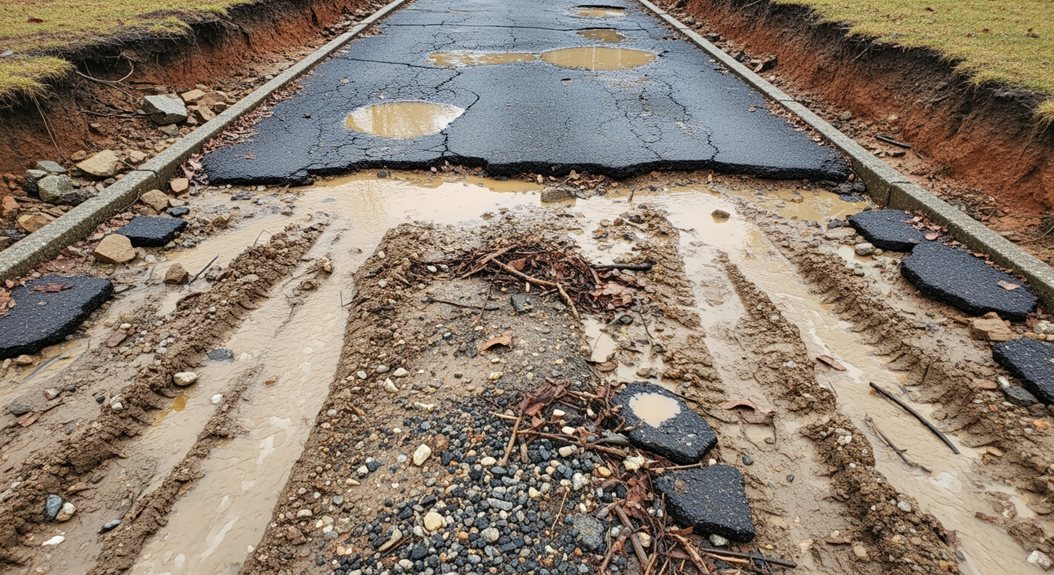
When water pools on a driveway instead of flowing away from it, the consequences extend far beyond surface-level inconvenience—improper drainage creates a cascade of structural problems that can reduce a driveway’s lifespan from decades to mere years. Water infiltration weakens the foundation layers beneath asphalt or concrete, causing cracks, potholes, and accelerated deterioration. Standing water also freezes in winter, expanding and fracturing surfaces through repeated freeze-thaw cycles.
Proper drainage requires sloping the driveway at least two percent away from structures and installing edge drains or French drains to redirect water. Permeable pavements and gravel shoulders offer additional solutions. These measures protect your investment by preventing water damage, extending durability considerably, and reducing costly repairs that community members know all too well.
2. Skipping or Rushing Base Preparation
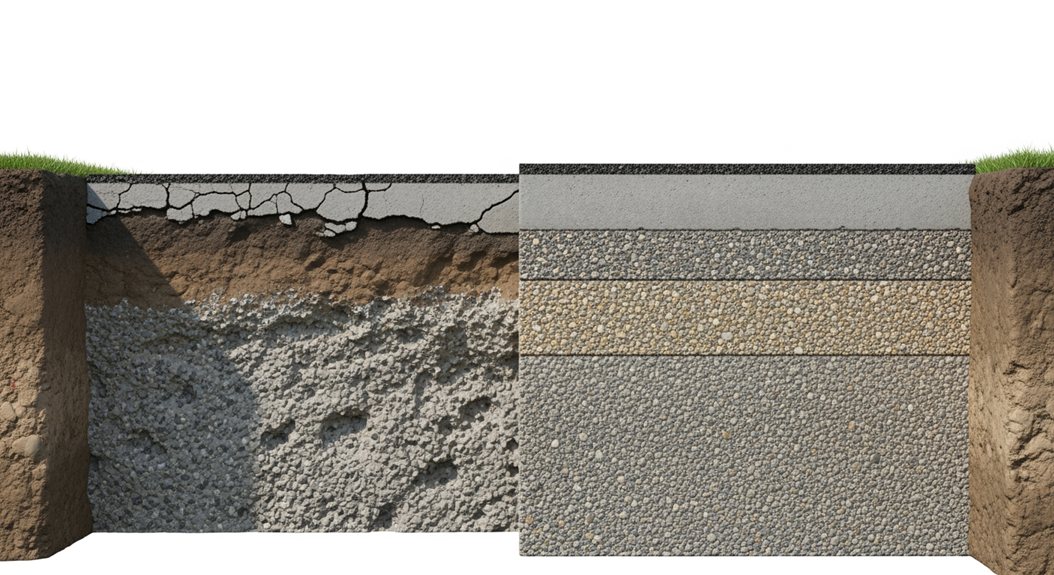
A durable driveway foundation requires two critical elements that many homeowners overlook: properly compacted soil and a quality gravel layer, both of which work together to prevent the settling, cracking, and pothole formation that plague hastily constructed driveways. When soil isn’t compacted adequately using specialized equipment, it continues to shift and settle beneath the pavement surface, causing uneven surfaces and structural failure within just a few years. The gravel layer—typically four to six inches of crushed stone—distributes weight evenly, improves drainage, and stabilizes the soil base, making this step absolutely essential rather than optional when building a driveway designed to withstand decades of vehicle traffic and harsh weather conditions.
Compacting Soil Properly
Because the foundation of any durable driveway depends entirely on what lies beneath the surface, properly compacting soil represents one of the most critical yet frequently overlooked steps in driveway construction. Inadequate compaction allows soil to settle unevenly, creating depressions and cracks that compromise the entire structure. When soil remains loose or partially settled, water infiltrates deeper layers, causing deterioration from beneath.
The solution requires using mechanical compactors—specialized equipment that systematically presses soil into dense, stable layers. Professionals typically compact soil in four-to-six-inch increments, achieving ninety-five percent compaction density. This methodical approach prevents future settling and extends driveway lifespan substantially.
Properly compacted soil creates a rock-solid foundation that distributes vehicle weight evenly, resists water damage, and maintains surface integrity for decades.
Gravel Layer Importance
Many homeowners and contractors underestimate the critical role that a properly installed gravel layer plays in driveway longevity, yet this component directly determines whether a driveway will remain intact for decades or deteriorate within years. Without adequate gravel foundation, water penetrates the soil beneath asphalt or concrete, causing erosion and structural failure.
| Layer Function | Depth Required | Material Type | Installation Method | Expected Lifespan |
|---|---|---|---|---|
| Drainage | 4-6 inches | Crushed stone | Compacted in layers | 15+ years |
| Support | 6-8 inches | Angular gravel | Heavy equipment | 20+ years |
| Stabilization | 2-4 inches | Limestone dust | Manual spreading | 25+ years |
| Reinforcement | 3-5 inches | Recycled asphalt | Roller compaction | 30+ years |
| Base prevention | 1-3 inches | Fine gravel | Settling time | 20+ years |
Properly constructed gravel layers distribute vehicle weight evenly, preventing potholes and cracks that compromise driveways prematurely.
3. Choosing the Wrong Material for Your Climate
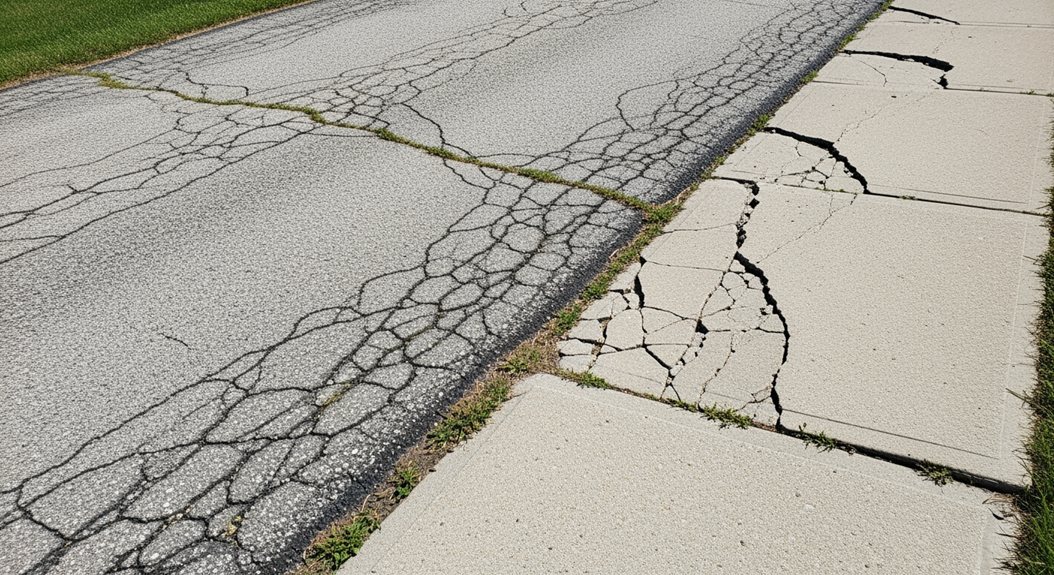
When homeowners select driveway materials without considering their local climate, they often face costly repairs and premature deterioration within just a few years. Asphalt cracks in freeze-thaw cycles, concrete spalls in harsh winters, and gravel shifts excessively in hot climates. The solution requires matching materials to regional conditions. Northern climates benefit from permeable asphalt that flexes during temperature fluctuations, while southern regions suit concrete’s heat resistance. Homeowners should research their area’s weather patterns, consulting local contractors about proven material choices. This alignment prevents expensive replacements and extends driveway life considerably. By investing time in climate-appropriate selection upfront, property owners protect their investment and join communities of satisfied homeowners who enjoy reliable driveways for decades.
4. Underestimating Required Thickness
A driveway that appears thick enough during installation may crack and crumble prematurely if it doesn’t meet load-bearing capacity requirements, which depend on the types of vehicles it will support and how frequently they’ll travel across it. Climate conditions further complicate thickness calculations since freeze-thaw cycles in cold regions cause water to expand beneath the surface, requiring additional depth to prevent heaving and damage, while hot, arid climates may demand different thickness standards to combat UV degradation and thermal stress. Builders and homeowners must consult local engineering standards and climate data to determine the proper depth—typically ranging from 4 to 6 inches for standard residential use—ensuring the driveway withstands both the weight pressing down from above and the environmental pressures working against it from beneath.
Load-Bearing Capacity Requirements
One of the most common and costly mistakes homeowners make involves installing a driveway without calculating the actual weight it needs to support, which leads to premature cracking, rutting, and complete failure within just a few years. Load-bearing capacity refers to how much weight a driveway can safely handle over time.
Homeowners who neglect this calculation often face expensive repairs when regular vehicles cause surface deterioration. The solution requires determining vehicle weight, traffic frequency, and climate conditions before construction begins. A typical passenger car weighs 3,000 to 4,000 pounds, while SUVs exceed 5,000 pounds. Professional engineers assess these factors to recommend appropriate base materials and thickness specifications.
Proper load calculations prevent structural failure, extend driveway lifespan considerably, and ultimately save homeowners thousands in replacement costs.
Climate Impact on Thickness
Many homeowners drastically underestimate how much thickness their driveway needs by ignoring the climate where they live, a critical oversight that leads to accelerated deterioration and costly repairs within just a few years. Cold climates demand thicker driveways because freeze-thaw cycles—when water enters pavement cracks, freezes, and expands—cause substantial damage. Hot, arid regions require different thickness considerations due to intense UV exposure and thermal stress. Standard recommendations typically suggest four inches for moderate climates, yet northern areas need six to eight inches of asphalt or concrete to withstand seasonal stress. Professional assessment guarantees your driveway matches regional demands, preventing premature cracking, potholes, and structural failure that compromise safety and aesthetics while protecting your investment long-term.
5. Ignoring Slope and Grade Considerations
Proper slope and grade—the angle and elevation changes of a driveway’s surface—represent foundational design elements that homeowners and contractors frequently overlook, yet their absence creates serious, costly problems. Without adequate slope, water pools on the surface, causing cracks, potholes, and accelerated deterioration. A driveway needs at least a 1-2% grade, meaning it should drop one to two inches per every fifty feet of length.
Solutions involve calculating proper drainage angles during initial planning and directing water toward storm drains or landscaping. Professional grading guarantees longevity, preventing expensive repairs later. By addressing slope considerations upfront, property owners join those who build driveways lasting fifteen to twenty years rather than facing premature replacement costs and safety hazards from standing water and ice formation during winter months.
6. Failing to Account for Expansion and Contraction
While proper grading prevents water damage from pooling, another silent threat undermines driveways from within: the constant expansion and contraction caused by temperature fluctuations. Asphalt and concrete naturally expand when heated and shrink when cooled, creating internal stress that eventually cracks the surface. Homeowners who ignore this reality face premature deterioration, with small fissures widening into major breaks within years. The solution involves installing proper expansion joints—deliberate gaps spaced every 10-12 feet that allow materials to move freely without cracking. Using flexible sealants in these joints further protects against moisture infiltration. By accommodating seasonal movement from the start, driveway owners extend their investment’s lifespan considerably, avoiding costly repairs and maintaining a structurally sound surface that truly lasts.
7. Cutting Corners on Edging and Borders
The edges and borders of a driveway might seem like minor details, but they play a pivotal role in structural integrity and longevity. Neglecting proper edging allows water infiltration, soil erosion, and base material displacement—problems that compromise the entire surface.
Without adequate borders, asphalt and concrete shift unpredictably, creating cracks that spread rapidly. Base layers crumble, and vegetation encroaches, destabilizing edges further.
| Issue | Consequence |
|---|---|
| Missing edging | Water seeps beneath surface, causing deterioration |
| Poor border installation | Soil migration weakens foundation support |
| Inadequate restraint | Pavement edges crumble and fracture |
Investing in quality edging materials—aluminum, steel, or concrete curbs—contains movement and redirects water away effectively. Proper installation prevents costly repairs by protecting vulnerable perimeter zones, ensuring your driveway withstands weather cycles and traffic stress reliably for decades.
8. Overlooking Subgrade Conditions and Soil Issues
Many driveway failures originate not from the surface itself, but from what lies beneath—the subgrade, which is the soil and foundation layer supporting the entire structure. Ignoring soil conditions leads to serious problems that compromise durability and create expensive repairs.
Weak subgrades cause cracking, settling, and uneven surfaces that deteriorate quickly. Proper assessment prevents these costly failures:
- Soil testing identifies clay content, drainage capacity, and bearing strength before construction begins
- Compaction obligations guarantee the foundation supports weight without shifting or settling over time
- Drainage solutions prevent water accumulation, which weakens soil and accelerates deterioration
Professionals who invest time understanding local soil conditions build driveways that last decades. This foundational step transforms surface materials into truly durable investments, protecting against premature failure and unexpected replacement costs.
9. Delaying Regular Maintenance and Sealing
Once a driveway is installed, the work doesn’t end—it actually intensifies, because neglecting regular maintenance and sealing accelerates deterioration far beyond what weather alone would cause. Without protective sealant, water infiltrates cracks and weakens the base layer, causing potholes and structural failure. Similarly, ignoring debris removal allows moisture to pool, fostering cracks that expand during freeze-thaw cycles.
The solution involves establishing a maintenance schedule: seal driveways every two to three years and clear debris regularly. Promptly filling small cracks prevents them from widening into expensive repairs. These preventive measures extend driveway lifespan by five to ten years while maintaining a polished appearance that reflects pride in homeownership. Investing minimal time and resources today prevents costly resurfacing or replacement tomorrow, protecting both property value and neighborhood standing.
Frequently Asked Questions
What Is the Average Cost Difference Between Asphalt and Concrete Driveways?
Concrete driveways typically cost 50-100% more upfront than asphalt, ranging from $8-18 per square foot versus $3-7 for asphalt. However, concrete’s longevity often justifies the premium investment for homeowners seeking lasting quality.
How Often Should I Have My Driveway Professionally Inspected for Damage?
Professional driveway inspections should occur annually, allowing homeowners to join the community of those who maintain their properties responsibly. Seasonal assessments catch emerging issues early, ensuring long-term durability and protecting one’s investment alongside fellow conscientious property owners.
Can I Repair a Driveway Myself, or Do I Need Professionals?
Homeowners can tackle minor repairs like filling small cracks themselves, joining the community of DIY enthusiasts. However, professionals should handle significant damage, extensive resurfacing, or structural issues to guarantee lasting quality and proper techniques.
What Is the Typical Lifespan of a Well-Maintained Asphalt Driveway?
A well-maintained asphalt driveway typically lasts 15 to 20 years. Regular seal coating every two to three years, prompt pothole repairs, and proper drainage considerably extend its lifespan, allowing homeowners to protect their investment effectively.
Are Permeable Pavement Options Better for Environmental Sustainability?
Permeable pavement options offer genuine environmental advantages by reducing stormwater runoff, filtering pollutants, and recharging groundwater. These sustainable alternatives align with modern community values while protecting local ecosystems and infrastructure.
Expert Final Thoughts
Building a durable driveway requires attention to nine critical elements, from drainage systems to regular maintenance schedules. Homeowners who address these mistakes—proper base preparation, appropriate material selection, adequate thickness, correct slope, and expansion joints—safeguard their investment for decades. Ignoring these fundamentals leads to costly repairs, premature cracking, and surface deterioration. By implementing these solutions systematically, property owners guarantee their driveways withstand weather, traffic, and time effectively.