

You’re likely overpaying for copier rentals without a systematic evaluation strategy. Start by tracking your actual monthly printing volume across departments to right-size equipment and avert unused capacity. Then examine equipment specifications, compare transparent pricing models with clearly defined per-page costs and maintenance fees, and authenticate service-level agreements including response times and backup equipment provisions. Finally, scrutinize contract flexibility for early termination options and upgrade provisions. This checklist prevents costly mistakes and guarantees you’re getting genuine value for your investment.
Expert Highlights
- Track monthly copy volume across departments to right-size equipment and avoid paying for unused capacity.
- Compare per-page pricing, maintenance fees, and supply costs upfront to prevent surprise charges and hidden expenses.
- Verify guaranteed response times, backup equipment provisions, and 24/7 emergency support in service level agreements.
- Review early termination clauses, upgrade flexibility, and usage allowances to ensure contract adaptability without penalties.
- Evaluate energy efficiency ratings and prioritize features directly tied to productivity rather than unnecessary upgrades.
Assess Your Organization’s Copy Volume and Printing Needs

Before you commit to a copier rental program, you’ll want to dig into exactly how much copying and printing your organization actually does, since this information becomes the foundation for every decision that follows. Track your monthly volume across departments to identify usage patterns and peak periods.
This data helps you right-size equipment and avoid overpaying for unused capacity. Consider implementing paper conservation initiatives and sustainable printing practices simultaneously, which reduce both costs and environmental impact.
Understanding your baseline needs prevents expensive rental agreements that don’t match reality, ensuring you’re investing wisely in solutions that actually serve your organization’s operations.
Evaluate Equipment Features and Technology Specifications
Once you’ve determined your organization’s copy volume, the next critical step is identifying which equipment features and technology specifications will actually support your daily operations without forcing you to pay for capabilities you’ll never use. Review energy efficiency ratings to reduce utility costs and environmental impact.
Assess equipment customization options that match your workflow—whether you need finishing features, advanced scanning, or cloud integration. Don’t get seduced by fancy functions gathering dust. Instead, prioritize features directly tied to productivity.
Match specifications precisely to operational requirements, avoiding unnecessary upgrades that drain budgets without delivering measurable returns.
Compare Pricing Models and Cost Transparency
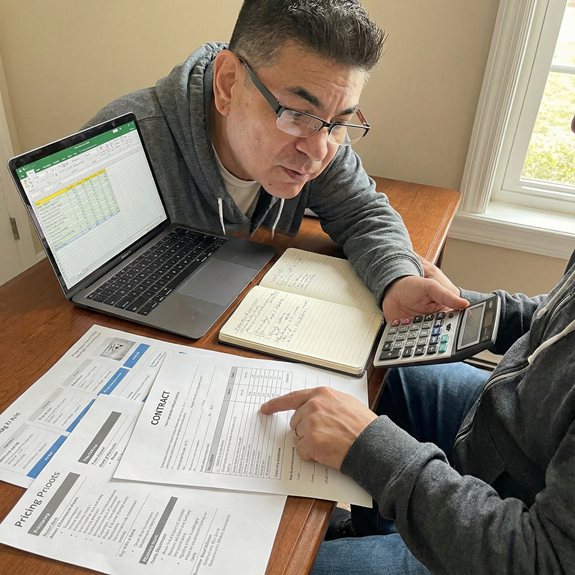
How do you actually know what you’re paying for when copier rental agreements come loaded with confusing fee structures, hidden charges, and pricing models that seem deliberately designed to obscure the true cost?
You need billing transparency and cost predictability to avoid budget surprises. Demand itemized breakdowns showing per-page costs, maintenance fees, and supply charges upfront. Request fixed-rate contracts that lock in prices for your rental term.
Demand itemized billing breakdowns upfront. Lock in fixed-rate contracts to avoid budget surprises and hidden charges.
- Per-page pricing clearly outlined in writing
- Monthly maintenance fees specified separately
- Supply replacement costs defined beforehand
- No surprise overage charges allowed
- Annual rate increase caps disclosed
Compare vendors’ total cost of ownership, not just base rental rates, ensuring you’re getting genuine financial clarity.
Review Maintenance and Support Service Levels
When you’re evaluating copier rental agreements, you’ll want to examine the response time guarantees that vendors offer, since a machine down for hours or days can seriously disrupt your workflow and cost you productivity.
Preventive maintenance coverage—which includes regular servicing, parts replacement, and inspections before problems occur—protects you from unexpected breakdowns and helps extend your equipment’s lifespan, ultimately saving you money on emergency repairs.
Response Time Guarantees
Why does it matter how quickly your copier rental company responds when equipment breaks down?
When your copier goes down, every minute costs productivity and money. You’ll want response time guarantees spelled out in your service level agreements, ensuring your vendor commits to specific timeframes like same-day or four-hour service. Response time monitoring holds companies accountable.
Consider these critical factors:
- Guaranteed response windows matching your business hours
- Escalation procedures if initial attempts fail
- Backup equipment provided during repairs
- 24/7 availability for emergency situations
- Performance penalties if standards aren’t met
Demanding clear response commitments prevents frustrating delays and keeps your operations running smoothly.
Preventive Maintenance Coverage
Regular maintenance keeps your copier running reliably and prevents costly breakdowns that disrupt your workflow, so you’ll want to confirm that your rental agreement includes detailed preventive maintenance coverage with clearly defined service levels.
Ask your provider about preventive maintenance scheduling—specifically, how often technicians inspect your machine and replace worn parts before failure occurs. Understanding preventive maintenance best practices means knowing whether your agreement covers toner replenishment, drum cleaning, and component replacements.
Request a maintenance log showing documented service visits, response times for urgent repairs, and what happens if equipment fails between scheduled appointments. This transparency guarantees you’re protected from unexpected downtime and repair costs.
Examine Contract Terms and Flexibility Options

Before you commit to a copier rental agreement, you’ll want to scrutinize the contract’s terms and flexibility options because they’ll determine how much control you actually have over your equipment and costs down the road. Your contract duration and service agreement customization directly impact your budget flexibility and operational freedom.
Early termination clauses protect you if business needs change unexpectedly. Upgrade flexibility lets you swap equipment without penalty fees. Service response times guarantee minimal downtime during critical projects. Usage allowances prevent surprise overage charges that drain budgets. Customizable maintenance tiers match coverage to your actual demands.
Verify Vendor Reliability and Customer References
Once you’ve locked down favorable contract terms, you’ll want to verify that the vendor behind those promises can actually deliver on them, because a contract’s only as good as the company backing it up. Check vendor longevity by researching how long they’ve operated and their industry reputation.
Assess financial stability through credit reports and client testimonials. Request references from current customers and contact them directly about equipment reliability, service response times, and problem resolution. Verify insurance coverage and certification credentials. A vendor with strong financials and satisfied customers guarantees you won’t be stranded with broken equipment or disappearing support when issues arise.
Frequently Asked Questions
What Environmental Certifications or Sustainability Practices Does the Copier Vendor Maintain?
You’ll want to ask vendors about their recycling policies and energy efficiency ratings—basically, you’re checking if they’re actually “green” or just greenwashing their way through sustainability claims.
Can We Upgrade or Downgrade Equipment Mid-Contract if Business Needs Change Unexpectedly?
You’ll find most vendors offer flexibility in contract terms, letting you upgrade or downgrade with customizable usage plans. Sure, they’ll charge you a fee for the privilege of changing your mind—because nothing’s truly free in the copier world.
How Quickly Does the Vendor Respond to Urgent Equipment Breakdowns or Emergencies?
You’ll want vendors with concrete service level commitments—ideally same-day response times. Don’t settle for “we’ll try”; demand on-site technician availability. Nothing’s worse than a broken copier and a vendor who’s basically ghosting you.
Are There Hidden Fees for Exceeding Monthly Page Limits or Special Features?
You’ll want to scrutinize those contracts carefully—hidden fees lurk like paper jams. Ask about toner replacement costs and maintenance schedules upfront. Don’t let surprise charges copy their way into your budget.
What Data Security Measures Protect Sensitive Documents Printed on Rental Copiers?
You’ll want vendors using data encryption protocols to scramble your secrets like a digital scrambled egg. Demand secure document disposal so your confidential stuff doesn’t become office gossip or recycling bin gold.
Expert Final Thoughts
You’ve now got the essential tools to make a smart copier rental decision. By thoroughly examining your volume needs, comparing equipment features, analyzing pricing transparency, checking maintenance support, scrutinizing contract terms, and verifying vendor credibility, you’ll safeguard a rental arrangement that genuinely fits your organization’s requirements while shielding your budget. Don’t rush this evaluation—taking time upfront prevents costly mistakes and guarantees you’re getting real value.